

How to Know If You Can Grow a Mustache
Before you spend weeks growing one out, you want a straight answer to a simple question: can I actually grow a mustache? It’s a fair thing to wonder — nobody wants to commit to the awkward patchy phase only to end up disappointed. The good news is there are real, honest signs that tell you what your mustache potential looks like, and most men can grow more than they think.
Here’s how to know if you can grow a mustache — seven practical signs to check, plus what to do if the early answer looks discouraging.
Not sure how long yours should take? Try our mustache growth calculator.

1. Look at the Men in Your Family
This is the single most reliable sign. Facial hair is largely genetic, so the men you’re related to — your father, grandfathers, uncles, older brothers — are the closest preview of your own mustache potential. If they grew thick, full mustaches, there’s a strong chance you can too. If facial hair runs thinner in your family, your mustache may be lighter — but that doesn’t mean you can’t grow something you’re happy with.
Genetics set the ceiling, but as we’ll see, almost nobody actually hits their ceiling on the first try.
2. Check for Any Growth on Your Upper Lip
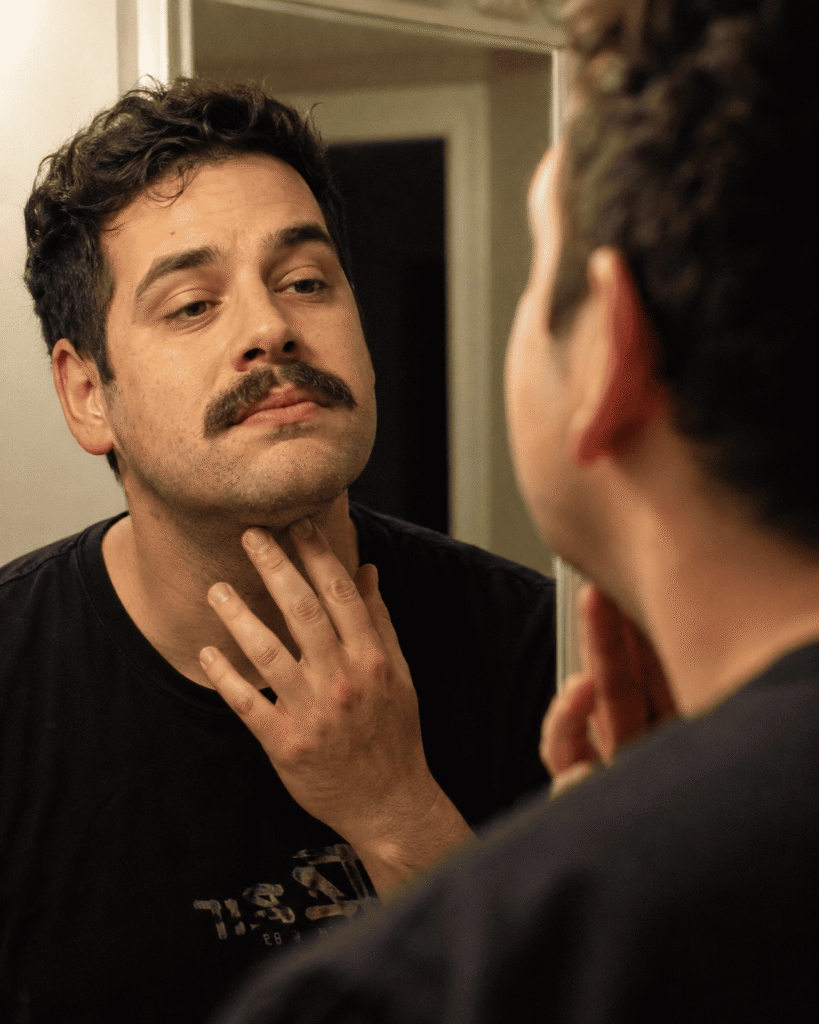
Run your fingers over your upper lip and look closely in good light. Do you see any hairs coming in — even fine, light, or sparse ones? If there’s growth happening at all, the follicles are active, and active follicles are what you need. Early mustache hair is often thin and pale before it darkens and thickens with age, so don’t dismiss it just because it’s faint right now.
If you see scattered hairs in some areas but gaps in others, that’s completely normal — most mustaches start patchy and even out with length and time.
3. Consider Your Age
Age matters more than almost anything except genetics. Facial hair develops gradually, and many men don’t reach full mustache thickness until their late twenties or early thirties. If you’re a teenager or in your early twenties with a thin or patchy upper lip, that is not your final answer — your mustache is very likely still developing. Some of the thickest mustaches you see started out as wispy teenage attempts.
So if you’re young, the honest truth is: you may not know your full potential yet, and that’s okay. Time is on your side.
4. Look at Your Overall Facial Hair
Do you grow hair elsewhere on your face — chin, cheeks, sideburns, jaw? If you’ve got beard growth coming in, your mustache area usually follows, since they’re driven by the same hormones. Strong growth elsewhere is a good sign your upper lip can fill in too. The mustache area is sometimes a little slower than the chin or cheeks, so give it extra patience if the rest is ahead.
5. Do the Four-Week Test
Here’s the only way to truly know: grow it out for at least four weeks without trimming or shaving. This is the real test, because you can’t judge mustache potential from a few days of stubble. Let it come in fully, resist the urge to shave during the awkward stage, and at the four-week mark you’ll see what you’re actually working with. Most men are surprised — what looked hopeless at week one often fills in noticeably by week four.
If you want the full breakdown of what to expect during those weeks, see our guide on how long it takes to grow a mustache, which walks through the timeline stage by stage.
6. Notice Your Growth Pattern, Not Just the Gaps
When your mustache starts coming in, pay attention to where it grows thickest rather than fixating on the patchy spots. Almost every mustache has some unevenness early on. A strong center, or good growth on the sides, gives you something to work with and shape — even if other areas are slower. Knowing your growth pattern helps you pick a style that flatters what you’ve got instead of fighting it.
7. Remember: “Thin” Doesn’t Mean “Can’t”
Here’s the most important sign of all — and it’s a mindset one. Many men decide they “can’t grow a mustache” when really they just have a thin one they never learned to make the most of. With patience, healthy grooming habits, and a few styling tricks, a thin mustache can look far fuller than it does at first.
So before you write yourself off, know that thin is workable. If your early growth is light, our guide on how to make your mustache thicker covers exactly how to get the fullest result your genetics allow — and how to make a thin ‘stache look thicker right now.
Not sure how long yours should take? Try our mustache growth calculator.
What If the Signs Aren’t Promising?
Let’s be honest, because you deserve honesty: some men genuinely struggle to grow a full mustache, usually due to genetics. If you’ve done the four-week test as an adult and the growth is very sparse, you have real options — and none of them are failures:
- Try a style that works with less density, like a pencil mustache, which needs very little thickness.
- Give it more time if you’re still young — it may fill in over the next few years.
- Embrace the choice fully. Plenty of great men have lived perfectly happily clean-shaven. A mustache is an option, not an obligation.
What we’d gently steer you away from is medical shortcuts like minoxidil or growth drugs based on a blog’s say-so. Those are health decisions with real side effects — if you’re considering them, talk to a doctor or dermatologist first, not a website.
The Bottom Line
So, how do you know if you can grow a mustache? Check your family genetics, look for any existing growth, factor in your age, see how your other facial hair is doing, and — most importantly — actually grow it out for four weeks and judge it then. Most men can grow more than they expect, especially with patience and the right habits.
The only way to truly fail is to never give it a fair chance. So let it grow, give it four weeks, and find out.
Not sure how long yours should take? Try our mustache growth calculator.

Frequently Asked Questions
At what age can you tell if you can grow a mustache? You’ll get hints in your late teens, but many men don’t reach full mustache potential until their late twenties or early thirties. A thin mustache when you’re young often fills in with time.
Does everyone have the ability to grow a mustache? Most men can grow at least some mustache, though thickness varies a lot based on genetics. Some grow thick ones easily; others grow thinner ones that still look great with the right style and grooming.
How long should I grow it before deciding if I can? At least four weeks without trimming. You can’t judge from a few days of stubble — the awkward early stage often looks far worse than the eventual result.
My mustache is patchy — does that mean I can’t grow one? No. Patchiness is normal, especially early and especially when you’re young. It often evens out with length, time, and training. See our guide on making your mustache thicker for how to improve it.
Once you know you can grow one, the next step is doing it right — start with how long it takes to grow a mustache for the full timeline, and how to make your mustache thicker to get the fullest result possible.
Not sure how long yours should take? Try our mustache growth calculator.