
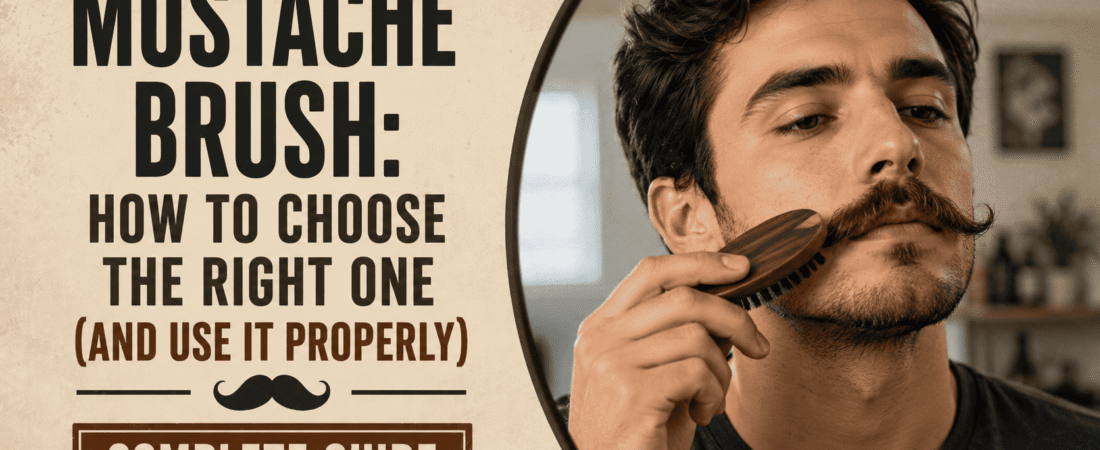
Mustache Brush: How to Choose the Right One (and Use It Properly)
A good mustache brush is one of the simplest, cheapest tools in grooming — and one of the most underrated. The right brush tames stray hairs, distributes oils, exfoliates the skin underneath, trains your mustache to grow in the direction you want, and makes a thin ‘stache look noticeably fuller. The wrong one (or none at all) leaves your mustache unruly and dry.
This guide covers both halves of the equation: how to choose the right mustache brush for your hair, and how to actually brush your mustache the right way for the best results.
Not sure how long yours should take? Try our mustache growth calculator.
Do You Really Need a Mustache Brush?
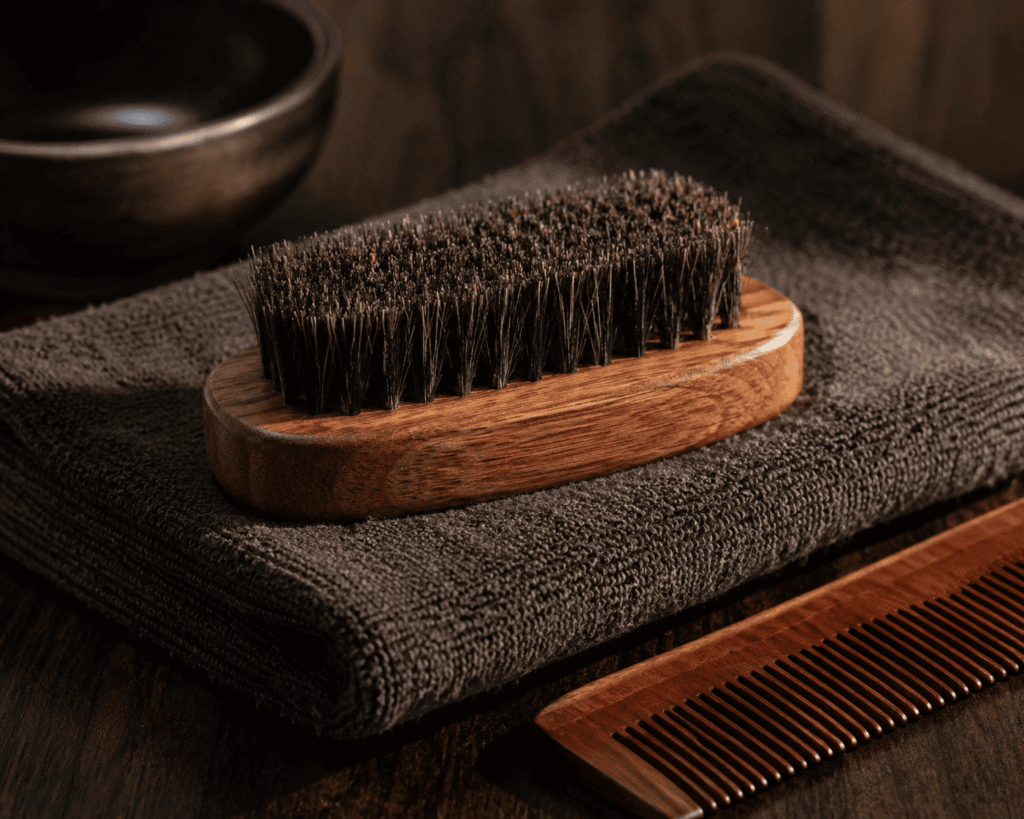
Short answer: if you’re growing or maintaining a mustache, yes — it’s worth the few dollars. Here’s what a brush actually does:
- Tames and styles — trains hairs to lie flat and grow in one direction, taming the unruly “wild” look.
- Distributes oils and balm — spreads your beard oil or wax evenly from root to tip, and pulls your skin’s natural oils through the hair.
- Exfoliates the skin — gently clears dead skin and reduces the itch and flakiness common when growing a mustache.
- Makes it look fuller — by laying hairs evenly and covering thin spots, a brush makes a sparse mustache look more uniform and dense.
- Adds shine — leaves your mustache looking healthy and well-groomed rather than dull.
So even a basic brush earns its place. The question is which type suits you.
You can also read Old West Mustache Styles: 9 Rugged Cowboy Looks and How to Grow Them
How to Choose the Right Mustache Brush
Not all brushes are equal. Here’s what actually matters when picking one:
Bristle Type
This is the most important factor.
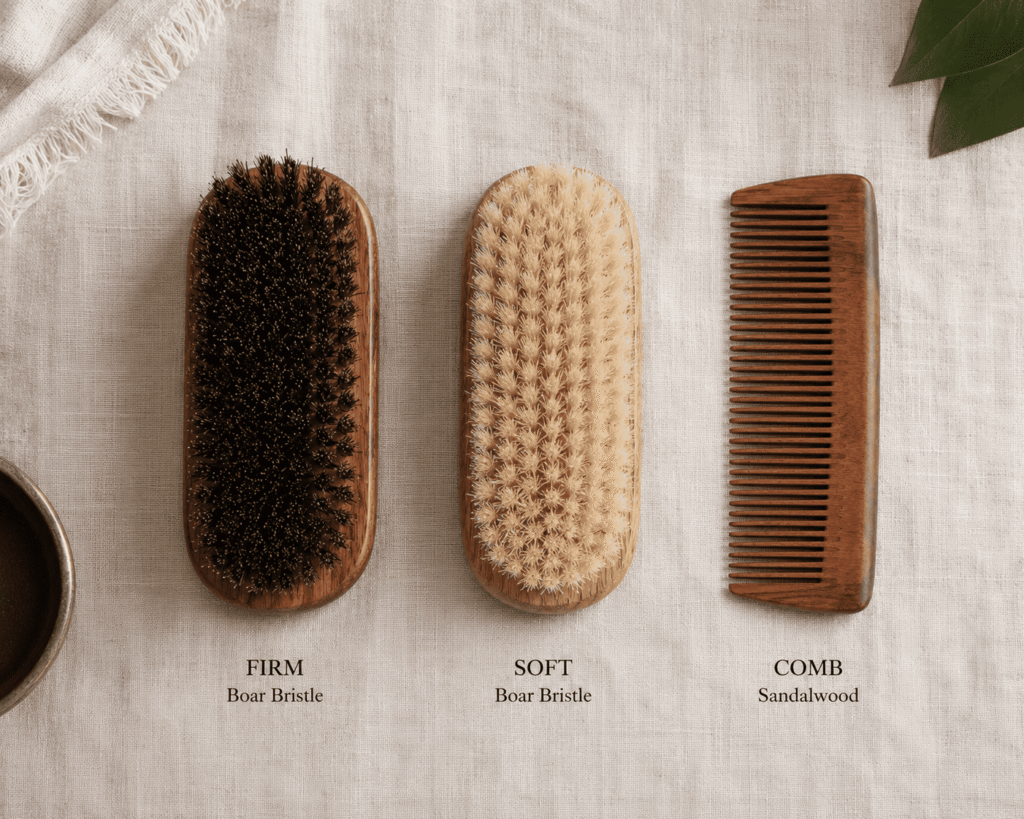
- Boar bristle is the classic, most-recommended choice. Natural boar hair is excellent at distributing oils, exfoliating, and adding shine, and it’s gentle enough for daily use. It comes in firm (first-cut) bristles — best for thicker, coarser, or longer mustaches — and soft (second-cut) bristles — better for shorter, finer, or thinner mustaches and sensitive skin.
- Vegan/synthetic (e.g. Tampico fiber) is the choice if you avoid animal products. Tampico, made from a natural plant fiber, gives a medium-firm feel that works well as a boar alternative.
For most men, a boar bristle brush is the sweet spot — firm if your hair is coarse, soft if it’s fine or short.
Size and Shape
The mustache is a small, sensitive area near your lip, so a smaller, narrower brush is far more practical than a big beard brush — it lets you groom tighter spaces precisely without “brushing your nose and ears at the same time.” Look for a compact, handled brush designed for the mustache or for detailing.
Handle vs. Palm Brush
- Handled brushes give you control and precision — ideal for the upper-lip area and styling.
- Palm (handle-less) brushes are great for full beards but less precise for a mustache alone.
For mustache-focused grooming, a small handled brush usually wins.
Build Quality
A solid wood handle (beechwood, bamboo, pear wood) and densely-packed, non-shedding bristles last for years. A cheap brush that sheds bristles is a false economy. You don’t need to overspend, but the very cheapest brushes often disappoint.
You can also read Mustache Gap: Why You Have One, and How to Fix It (or Rock It)
What to Look For (Quick Buyer’s Checklist)
When you’re ready to buy, look for:
- 100% boar bristle (firm for coarse/long hair, soft for fine/short) — or Tampico fiber if you want vegan.
- A compact, handled design suited to the mustache area.
- A durable wood handle and densely packed, non-shedding bristles.
- Good reviews mentioning the bristles hold up and don’t shed.
- A price that matches quality — you don’t need the most expensive, but avoid the rock-bottom ones that shed.
A brush like this typically costs only a few dollars to around twenty, making it one of the best-value grooming tools you can own.
You can also read Can a Big Mustache Make Your Face Look Pudgier? (The Honest Answer)
How to Brush Your Mustache (Step by Step)
Owning the brush is half of it — technique is the other half. Here’s how to do it right:
- Start clean and slightly damp or dry. Brush on a clean mustache, either dry or very slightly damp — not soaking wet, as wet hair is more fragile.
- Apply your product first (optional). If you use beard oil, balm, or wax, apply a small amount before brushing so the brush distributes it evenly.
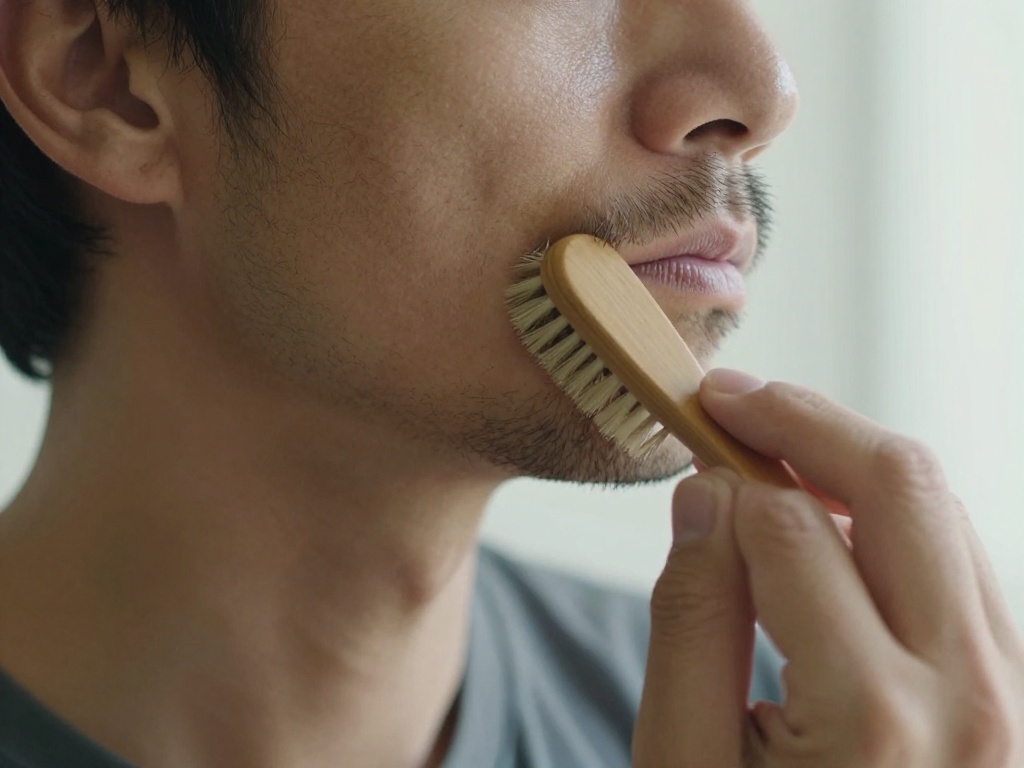
- Brush in the direction of growth. Use short, gentle strokes following the way your mustache grows — usually downward and slightly outward from the center. This trains the hairs and lays them flat.
- Work from the center outward. Start under the nose and move out toward the corners for an even, symmetrical shape.
- Be gentle. Let the bristles do the work — don’t drag or yank. Aggressive brushing irritates the skin and can break hairs.
- Finish by styling. Once the hairs are evenly laid and product is distributed, shape the ends with the brush (or a comb for finer detail).
- Brush daily. Once-a-day brushing trains the mustache over time, distributes oils, and keeps it looking its best.
Brush vs. Comb — Which Should You Use?
They do different jobs and many men use both. A brush distributes oils, exfoliates, and is great for shorter mustaches and overall training. A comb gives finer control for styling, detangling, and shaping longer mustaches (especially handlebars). For a short-to-medium mustache, a brush is usually enough; for longer styles, add a comb.
Not sure how long yours should take? Try our mustache growth calculator.
Does Brushing Your Mustache Help It Grow?
This is a common question, so here’s the honest answer: brushing doesn’t directly make your mustache grow faster or create new hair — growth is set by genetics, age, and hormones. But brushing does genuinely help in indirect ways: it trains hairs to lie in a uniform direction (making your mustache look fuller and more even), exfoliates the skin to support healthy follicles, and distributes natural oils that keep hair conditioned and less prone to breakage. So while it won’t change your growth rate, daily brushing helps your mustache reach and show its fullest, healthiest potential — which is why it’s one of the core habits in growing a great ‘stache. (For more, see our guides on how to make your mustache thicker and how to grow a mustache faster.)
Frequently Asked Questions
What kind of brush is best for a mustache?
A small, handled boar bristle brush is the most recommended — firm bristles for coarse or longer hair, soft bristles for fine or short hair. For a vegan option, a Tampico-fiber brush works well.
How often should I brush my mustache?
Once a day is ideal. Daily brushing trains the hairs, distributes oils, exfoliates the skin, and keeps your mustache looking even and well-groomed.
Does brushing your mustache make it grow faster?
No — brushing doesn’t change your growth rate, which is genetic. But it makes your mustache look fuller and healthier by training hairs, reducing breakage, and distributing oils.
Should I use a brush or a comb for my mustache?
Both have a place. A brush distributes oils and works well for shorter mustaches; a comb gives finer control for styling and longer styles like handlebars. Many men use both.
How do I clean a mustache brush?
Periodically remove trapped hair, then gently wash the bristles with a little mild soap and warm water, rinse, and let it air-dry bristles-down so water doesn’t soak the handle.
Not sure how long yours should take? Try our mustache growth calculator.
A mustache brush is one of the cheapest, highest-value tools in grooming. Choose a small, handled boar bristle brush (firm for coarse hair, soft for fine), brush daily in the direction of growth with gentle strokes, and pair it with your oil or balm for the best results. It won’t grow new hair, but it’ll train, condition, and fill out your mustache so it looks its absolute best — and it’ll last for years.
Ready to round out your grooming kit? See our guides on how to make your mustache thicker and the honest truth about castor oil for your mustache.