
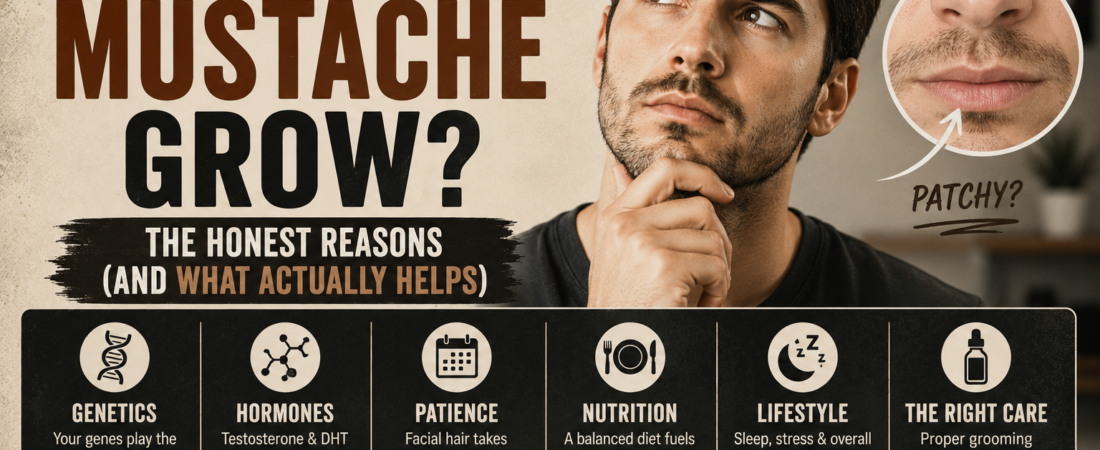
Why Won’t My Mustache Grow? The Honest Reasons (and What Actually Helps)
You’ve committed. You’ve waited. You’ve resisted shaving. And yet your upper lip stays stubbornly thin, patchy, or just… stuck. If you’re staring in the mirror wondering why won’t my mustache grow? — first, take a breath. This is one of the most common grooming frustrations there is, and feeling discouraged about it doesn’t mean anything is wrong with you.
Let’s go through the real reasons honestly, what you can actually do about each one, and how to tell the difference between “give it time” and “this is just my genetics.” No hype, no miracle-cure sales pitch — just the truth.
You can use our Free mustache growth calculator

First: It’s Probably Not “Broken” — It’s One of These
In the vast majority of cases, a mustache that won’t grow comes down to a handful of normal, explainable factors. Here they are, from most common to least.
1. Genetics (the biggest factor by far)
Your DNA is the single biggest decider of how much facial hair you can grow, where it grows, and how thick it gets. If the men in your family have thin or patchy mustaches, you may have inherited the same pattern — and no product changes your genes. This isn’t a personal failing; it’s just the hand you were dealt, and plenty of men with “difficult” mustache genetics still find a style that works for them.
2. Age — You Might Just Be Early
This is the one most young men don’t want to hear but really need to: facial hair often keeps developing into your late twenties and early thirties. If you’re between roughly 18 and 25 and your mustache is thin or patchy, there’s a very good chance it simply hasn’t finished coming in yet. Dermatologists note that genes decide when your facial hair reaches its full potential — and for many men, that’s years away yet. The thin mustache you’re frustrated with at 20 can be a completely different mustache at 28.
3. You’re Judging It Too Early
A mustache in week two looks nothing like the same mustache at week six. Many men decide “it won’t grow” during the patchy awkward stage and shave it off before it ever had a chance to fill in. If you haven’t given it a solid 4–6 weeks untouched, you may not actually have a growth problem — you may just be quitting early. (Not sure how long yours should take? Try our mustache growth calculator.)
4. Hormones
Testosterone and DHT play a real role in facial hair. Most men with thin mustaches have perfectly normal hormone levels and are simply on the lower-genetics end — but if your facial hair is very sparse and accompanied by other changes, hormones could be a factor. This is a question for a doctor, not a blog, and not a reason to self-diagnose or buy supplements.
5. Nutrition, Stress, and Lifestyle
Your hair reflects your overall health. Genuine nutritional deficiencies, crash dieting, chronic stress, and poor sleep can all weaken hair growth. The honest framing: fixing a real deficiency or unhealthy pattern can help your hair do its best — but loading up on supplements when you’re not deficient won’t override your genetics.
Not sure how long yours should take? Try our mustache growth calculator.

“Why Can I Grow a Beard But Not a Mustache?”
This is one of the most common versions of the question — and it’s completely normal. The upper-lip area often fills in slower and later than the cheeks and chin, because the follicles there can have a different growth pattern and density. Many men have a full beard for years before the mustache catches up. So if your cheeks and chin are thriving while your ‘stache lags, that’s a known, normal quirk — and a good sign your mustache likely will come in with more time.
“Why Won’t My Mustache Grow Past a Certain Length?”
If your mustache grows then seems to “stop,” a couple of things are usually going on: each hair has a maximum length set by its growth cycle (so finer hairs may simply reach their limit), and dry, brittle hairs can break off at the ends, making it look like it stopped growing. Keeping the hair conditioned and healthy (so it doesn’t snap) often lets it look longer and fuller over time.
What You Can Actually Do (Honest Fixes)
Here’s what genuinely helps your mustache reach its fullest possible growth — within your genetic limits:
- Be patient — give it 4–6 weeks minimum before judging, and months for a full verdict.
- Don’t shave during the awkward stage — you reset all your progress.
- Keep the skin healthy — clean and gently exfoliate so follicles aren’t blocked.
- Brush it daily — trains hairs and makes thin areas look fuller.
- Eat well, sleep well, manage stress — give your body what it needs.
- Style around what you have — a thinner mustache can look great in the right style (a pencil or natural style needs far less density than a Hungarian).
For the full approaches, see our honest guides on how to make your mustache thicker and how to grow a mustache faster.
When It’s Worth Seeing a Doctor
Most thin mustaches are just genetics and age — nothing medical. But it’s genuinely worth a conversation with a doctor or dermatologist if:
- You’ve noticed a sudden change in your facial (or body) hair.
- Very sparse growth comes alongside other symptoms.
- You’re considering treatments like minoxidil, which is a medication with possible side effects and should be discussed with a professional, not started off a blog.
A doctor can identify whether anything underlying is involved and give you advice tailored to you — which beats guessing every time.

A Gentle Reality Check
It’s worth saying plainly, because a lot of men quietly struggle with this: your worth has nothing to do with how thick your mustache is. Some of the most confident guys wear a thin or patchy ‘stache and own it completely — and confidence reads better than density ever will. Give your mustache a fair chance with time and good habits, style it to flatter what you’ve got, and if it’s genuinely not your thing genetically, that’s okay too. You’ve got options either way.
Frequently Asked Questions
Why won’t my mustache grow even though I’m patient?
Most often it’s genetics and age. If you’re under about 25, it’s very likely still developing. Give it a full 4–6 weeks at minimum, keep the skin and hair healthy, and remember that genetics set your ceiling.
Why can I grow a beard but not a mustache?
The upper-lip area often fills in slower and later than the cheeks and chin — a normal difference in follicle pattern. Many men’s mustaches catch up with more time.
Will my mustache ever fill in?
Quite possibly, especially if you’re young — facial hair often keeps developing into the late twenties and early thirties. Patience and healthy habits give it the best chance; genetics set the final limit.
Can anything make my mustache grow if it’s genetic?
No product overrides genetics. You can help it reach its fullest potential with patience, healthy skin, daily brushing, and good nutrition — but you can’t exceed what your genes allow. Medical options like minoxidil are a doctor conversation.
Is it normal for my mustache not to grow at 20?
Yes, very. Many men at 20 are still developing facial hair and see it fill in noticeably over the following years.
If your mustache won’t grow, the honest reasons are almost always genetics, age (you may simply be early), judging it too soon, or general health — not anything broken. Give it real time, keep the skin and hair healthy, brush daily, and style it to suit what you have. See a doctor if anything changed suddenly or you’re considering medication. And above all, don’t let a thin ‘stache dent your confidence — plenty of men wear one and look great doing it.
Curious how long yours should actually take? Try our mustache growth calculator, and read the stages of growing a mustache to see what’s normal at each point.